
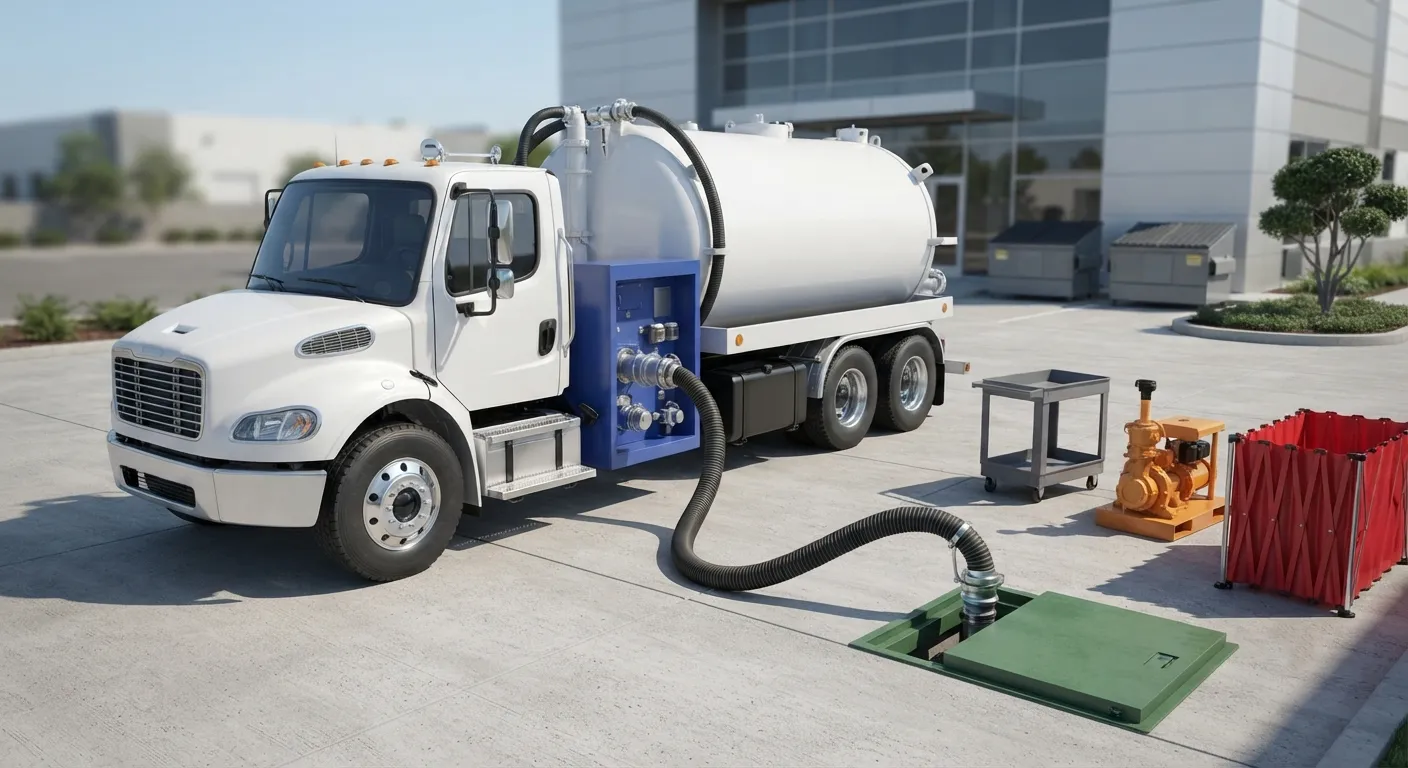
How often does a grease trap need pumping?
Pump when fats, oils, grease and solids reach 25 percent of the liquid depth in the tank, a measured threshold, not a calendar guess. A busy New Braunfels restaurant kitchen can hit that mark faster than a slow-turn cafe, so volume drives the schedule more than the date on a sticker. New Braunfels Porta Pros checks depth at every visit and sets the next pump-out from what we find, not from a generic quarterly rule. Waiting too long backs grease into your drain lines and can shut down a kitchen mid-shift, much like a neglected septic tank warning signs situation on the residential side. If you manage several locations, pair this with commercial grease trap pumping on a fixed route so no site gets skipped. Restaurants near event corridors, including venues that book festival restroom rental or concert restroom rental support during high-traffic weekends, often see FOG loads spike right alongside foot traffic. If your kitchen also handles septic waste from an on-site tank, see septic pumping service or how often to pump a septic tank for the residential side of that comparison.
What does grease trap pumping cost?
Cost depends on interceptor size, access, and whether the call is scheduled or same-day, similar to how dumpster rental cost varies with size and pickup timing. Septic and grease pumping work in New Braunfels falls into a day-rate band rather than a flat number, since truck time and disposal both factor in.
| service call | typical range |
|---|---|
| scheduled pump-out (day rate) | $150 to $300 |
| weekend or rush call | $50 to $150 add-on |
Ask about routing when you book, the same way you would when comparing porta potty rental per day against a longer commitment. A kitchen 14.6 miles southeast in Seguin or 14.9 miles southwest in Cibolo still falls inside our regular service loop, and stacking your call with a nearby stop can hold the price near the low end. For full pricing context on related equipment, septic tank pumping cost breaks down the tank side, and porta potty rental cost covers what a kitchen renovation project might need if restrooms go offline during work.
Do I need emergency grease trap pumping?
Yes, if grease is backing up into a floor drain, a prep sink is draining slow, or you smell sewage near the trap. Those are signs the tank has passed the 25 percent FOG threshold and needs a call now, not next week. New Braunfels Porta Pros runs emergency septic service alongside emergency grease calls, so a kitchen that's flooding at 10pm on a Friday isn't waiting until Monday. A backed-up trap can also trip health code issues fast, and a shut kitchen costs more than a rush fee, the same logic that applies when a job site needs emergency porta potty rental fast. If your facility is under renovation and needs interim sanitation while plumbing gets rerouted, look at home renovation porta potty or portable restroom rental to keep staff covered. For crews doing the plumbing work itself, construction site services and construction dumpster rental cover the debris side of a kitchen retrofit, and a roll-off dumpster rental or a smaller 10 yard dumpster rental handles the torn-out fixtures.
Grease trap work sits under the same general sanitation framework as job site facilities. OSHA 1926.51(c) sets toilet ratios for construction crews, which matters if your grease trap replacement involves a build-out crew on-site for more than a day. 29 CFR 1910.141(d)2) requires soap and towels or a hand-drying device at washing stations, a detail worth checking if your kitchen staff use a handwash setup near the trap; see handwashing station rental or handwashing requirements for specs. If the job also touches a grease-adjacent area where paints or coatings get applied, OSHA 1926.51(f)(1) governs washing facilities for that contaminant exposure specifically, not general handwashing.
How do I know my grease trap is full?
Slow drains, gurgling sounds, and a sewage smell near the trap are the usual signs. A technician measures FOG depth directly rather than guessing from symptoms alone, and 25 percent depth is the trigger point for pumping, much as dumpster weight limits set a hard threshold on the debris side.
Can I schedule recurring grease trap service?
Yes. Most commercial kitchens set a recurring route based on measured volume rather than a fixed date, and New Braunfels Porta Pros adjusts the interval after each visit based on what the depth check shows, the same way a monthly porta potty rental gets revisited on a set service day.
Is grease trap pumping different from septic pumping?
Yes. A grease trap handles kitchen FOG waste and gets pumped by depth threshold, while a septic tank handles household or building wastewater and follows a 3 to 5 year interval tied to tank size and household size.
Does a restaurant need a permit for grease trap service?
Permit and disposal rules vary by facility type and haven't been verified here, so confirm requirements directly with the city before your service date.
What happens during a grease trap pump-out?
A technician measures FOG depth, pumps the tank, and hauls waste for disposal, a process outlined further on septic tank cleaning. Most calls take under an hour for a standard commercial interceptor, and the crew checks the trap's condition before leaving.
Next step
Get a delivery date
Tell us the address, the dates and the headcount. We size the order and confirm the route.